On one side, AI-native companies are hitting $400M ARR in under two years with 150 people. Consumption-based pricing, PLG motions seeding enterprise pipeline, org structures that look nothing like what existed five years ago.
On the other side, enterprise sales orgs are still running annual planning cycles, setting quotas from top-down spreadsheets, and managing territories in systems that don't talk to each other.
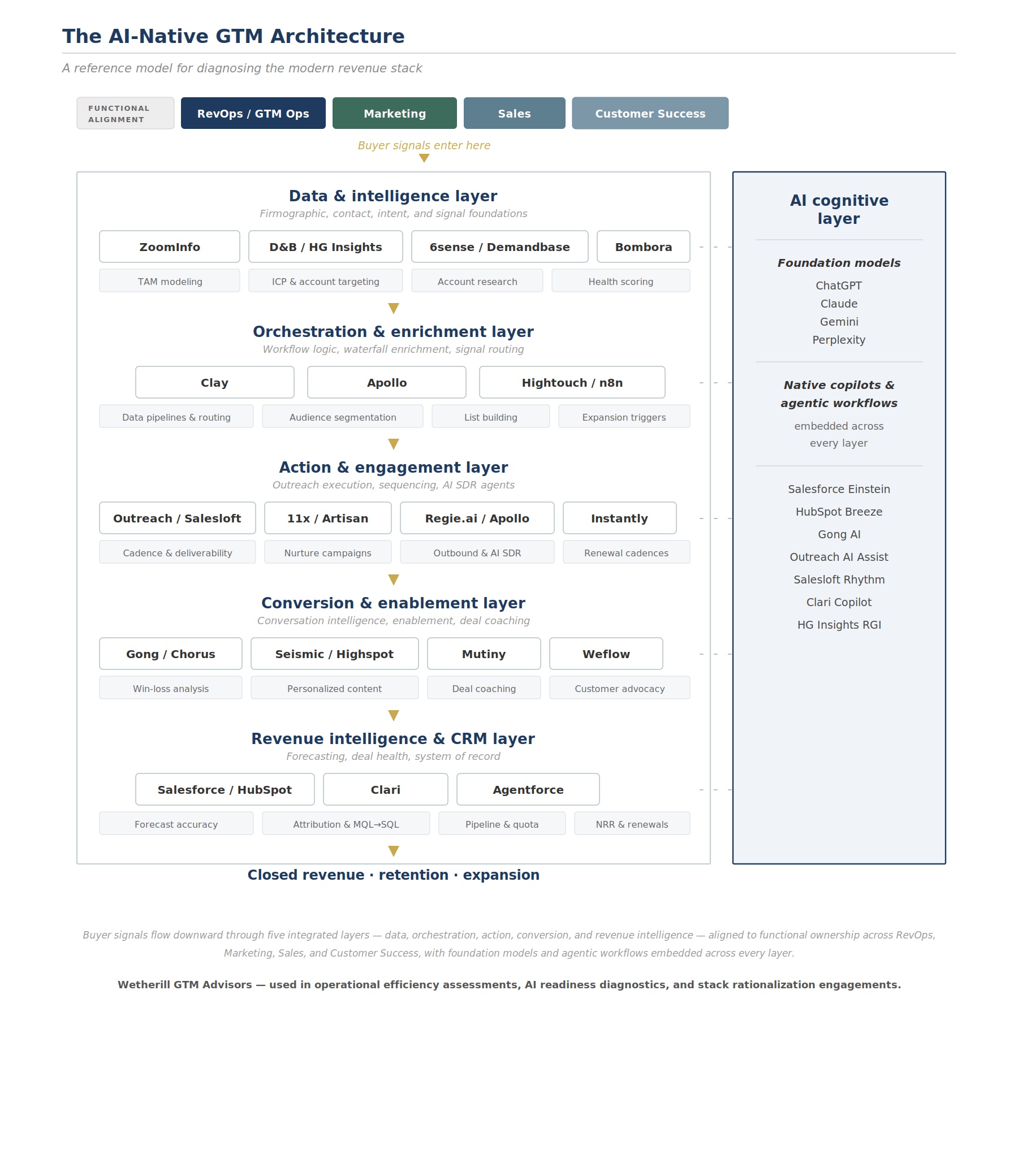
The data tells the real story: 76% of B2B organizations are now deploying agentic AI in their GTM functions. But 88% of those pilots never reach production. The gap isn't the AI. It's the operating model underneath it.
The companies that will win aren't on either extreme. They're the ones that can take the rigor of enterprise GTM infrastructure and run it at the speed the market now demands.
I spent 25 years building that infrastructure at Oracle: territory design, quota architecture, incentive compensation, and budget governance connected through a unified planning platform supporting 10,000+ sellers. That's the foundation high-growth companies hit a wall without once they pass $100M ARR.
But infrastructure without speed is just bureaucracy. Enterprise GTM teams that can't move to continuous planning, real-time territory intelligence, and governed AI-assisted decision-making will lose to smaller competitors who built it from day one.
Three things I'm watching in 2026: continuous planning replacing annual cycles, where the companies building rolling scenario models that update weekly are outpacing the ones still locked into Q4 territory redesigns that go live in Q1. Consumption-based models forcing RevOps to rethink comp design, because when revenue scales with usage instead of seat count, the entire quota and territory framework needs to be rebuilt. And the "agentish vs. agentic" question becoming the defining GTM operations decision, where the real conversation isn't whether to deploy AI agents but how much autonomy is safe when revenue, compliance, and trust are on the line.
The next generation of GTM leaders won't be defined by whether they came from enterprise or high-growth. They'll be defined by whether they can build infrastructure that scales both up and fast.